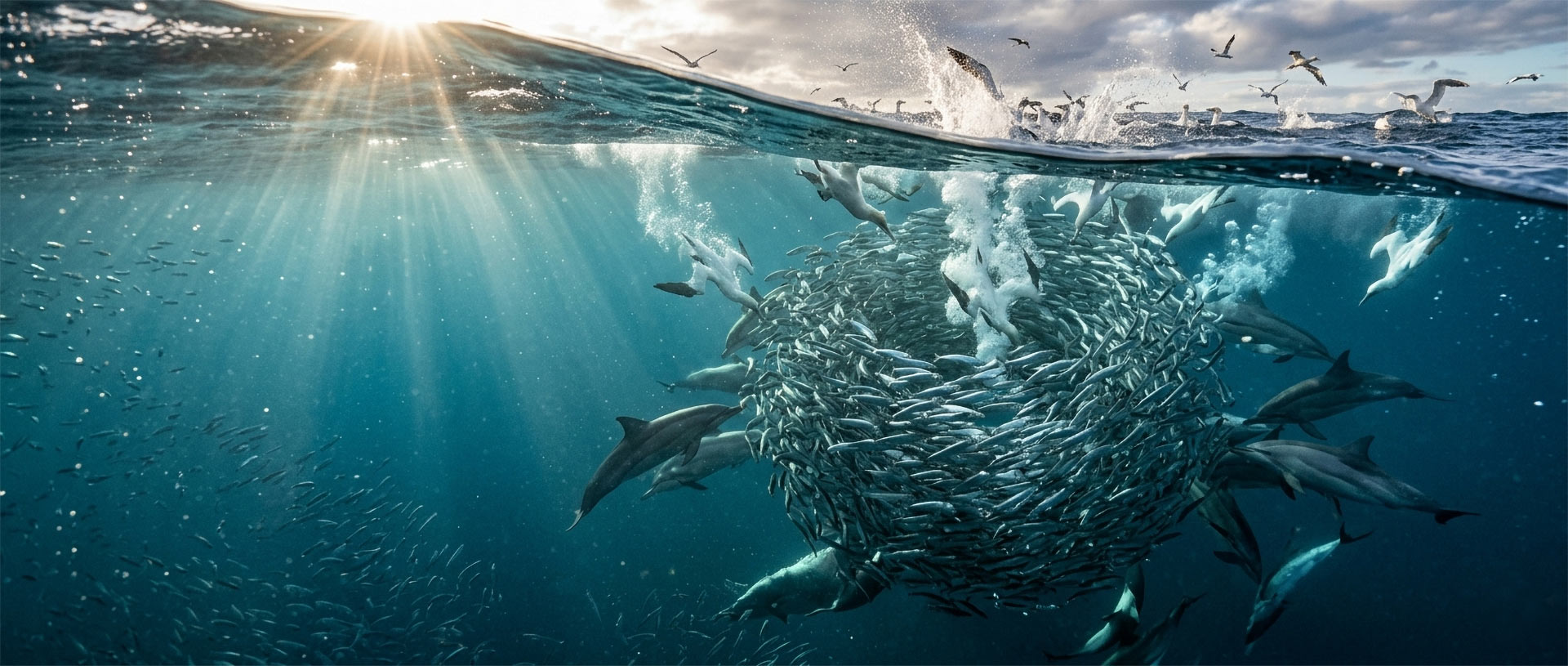
When Is the Sardine Run in South Africa?
The Sardine Run in South Africa takes place during June and July, with activity often influenced by ocean temperature, currents, visibility, wind, and weather conditions.
During this period, sardine shoals move along the east coast of South Africa, attracting some of the most impressive predator activity seen anywhere in the marine world. Common dolphins, sharks, whales, and Cape gannets often work the same area, creating the bait ball encounters that have made the Sardine Run famous
Because this is a natural migration, no two seasons are the same. Some days may involve long searches along the coast, while other days can produce fast-moving action, multiple bait balls, surface feeding, diving birds, and unforgettable in-water encounters.
Sardine Run South Africa 2027
Join the Wild Coast's ultimate marine adventure from Port St Johns. Limited June & July availability.
Book Your AdventureWhy Port St Johns Is One of the Most Important Sardine Run Locations
Port St Johns is one of the most significant launch points for the Sardine Run because of its position on the Wild Coast. Its location allows boats to access and navigate a large, productive section of coastline where Sardine Run activity can develop quickly.
From Port St Johns, African Watersports can search a wide coastal range, from Mkambati all the way around toward Coffee Bay, depending on the day's ocean conditions, reports, fuel planning, and where the action is developing.
This launch position is important because the Sardine Run does not happen in one fixed place. The sardines, dolphins, sharks, whales, and birds are constantly moving. A successful Sardine Run operation needs range, experience, fuel capacity, and the ability to follow the signs of activity across a wide area.
African Watersports has the boats, crew experience, and fuel capacity needed to take advantage of the action when it is in the area. This means guests are not limited to one small stretch of water. The team can actively search the coastline, track predator activity, follow bird movement, and position the boat where the best opportunities are developing.
African Watersports also makes use of a fixed wing spotter plane that can handle the sometimes harsher conditions experienced during the Sardine Run season. This gives the team the ability to cover areas quickly, discover where the action is developing, and direct the boats toward the most productive activity.
From Port St Johns, this gives African Watersports a strong competitive advantage for finding the action within a 90 km radius. The combination of boat range, fuel capacity, experienced crew, and aerial support means the team can respond quickly when sardines, dolphins, sharks, whales, and seabirds are active in the area.
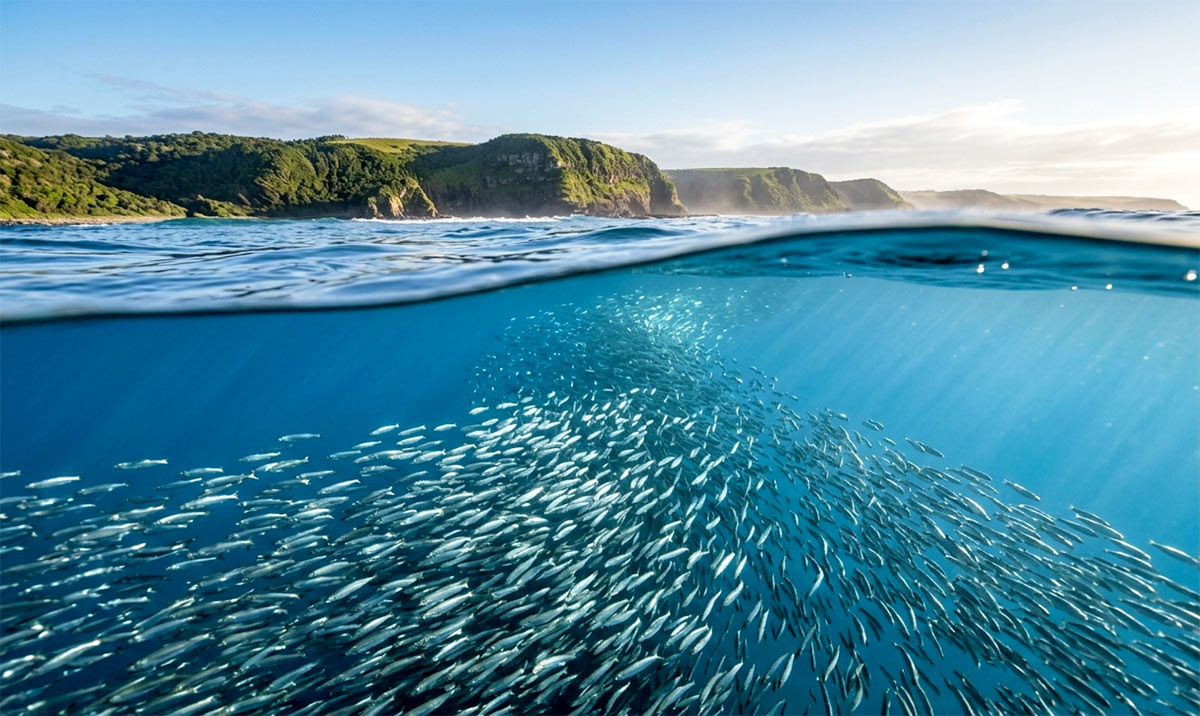
Where Can You Experience the Sardine Run?
The Sardine Run is associated with South Africa's eastern coastline, but the Wild Coast around Port St Johns remains one of the most important areas for serious Sardine Run expeditions.
For African Watersports, Port St Johns is the key launch base because it gives the team access to a wide and productive section of coastline. From this position, the boats can search for activity along the Wild Coast and respond to where the sardines, dolphins, sharks, whales, and seabirds are moving on the day.
This matters because the Sardine Run is not fixed to one exact point. The action can shift quickly, and a successful expedition depends on mobility, range, local knowledge, boat capability, and enough fuel capacity to follow the signs when the ocean comes alive.
Sardine Run Tours from Port St Johns
Joining a professional Sardine Run tour gives guests the best opportunity to experience this migration safely and effectively.
Each day begins with the search. The crew looks for the signs that matter: diving Cape gannets, feeding dolphins, disturbed water, whale activity, current lines, bait movement, and reports from the area. Once activity is located, the boat moves into position so guests can observe the action and, when conditions allow, enter the water.
The fixed wing spotter plane adds another important layer to this search. By covering a wide area quickly from above, the spotter plane helps African Watersports identify where the action is, giving the team a competitive advantage when deciding where to move and where to focus the day's search.
The Sardine Run is not a staged encounter. It is a real marine migration in open water. That is what makes it so exciting. Every launch has the possibility of something different, from surface feeding to underwater bait balls, fast dolphin activity, shark encounters, whale sightings, and dramatic seabird dives.
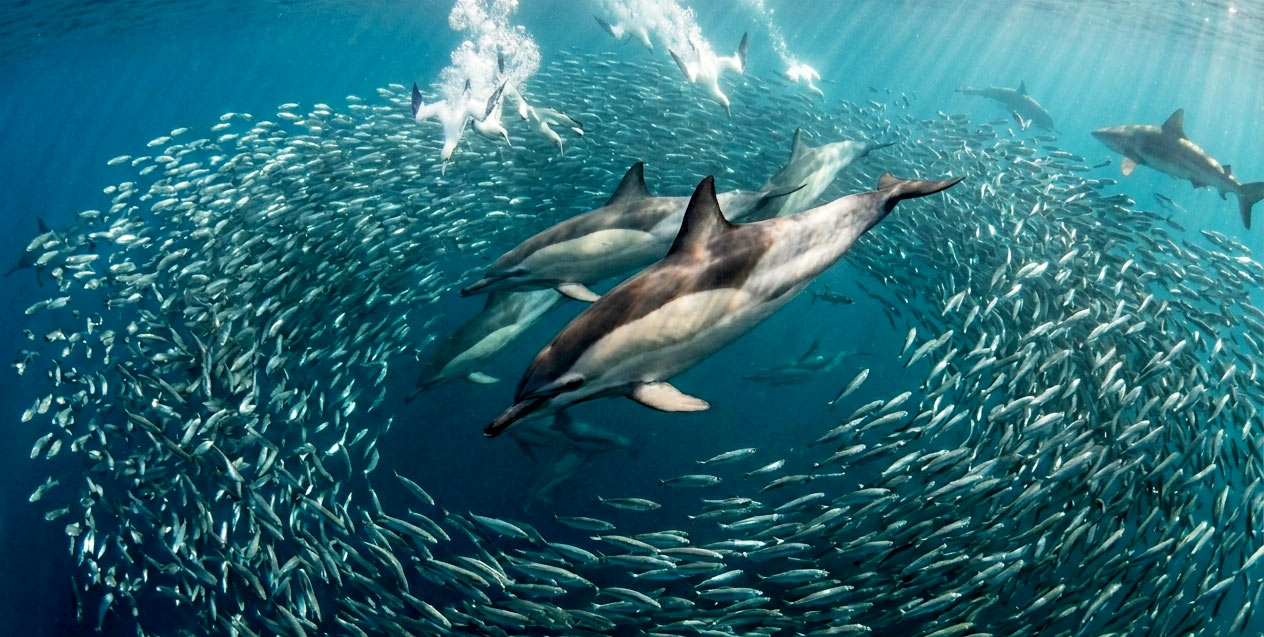
Sardine Run Diving with Sharks and Dolphins
For underwater enthusiasts, Sardine Run diving is regarded as one of the world's most exciting marine wildlife experiences.
The migration attracts an impressive range of marine life, including:
- Common dolphins
- Bottlenose dolphins
- Spotted and Pacific tropical dolphins
- Bronze whaler sharks
- Blacktip sharks
- Dusky sharks
- Humpback whales
- Southern right whales
- Bryde's whales
- Cape gannets
- Other seasonal marine visitors
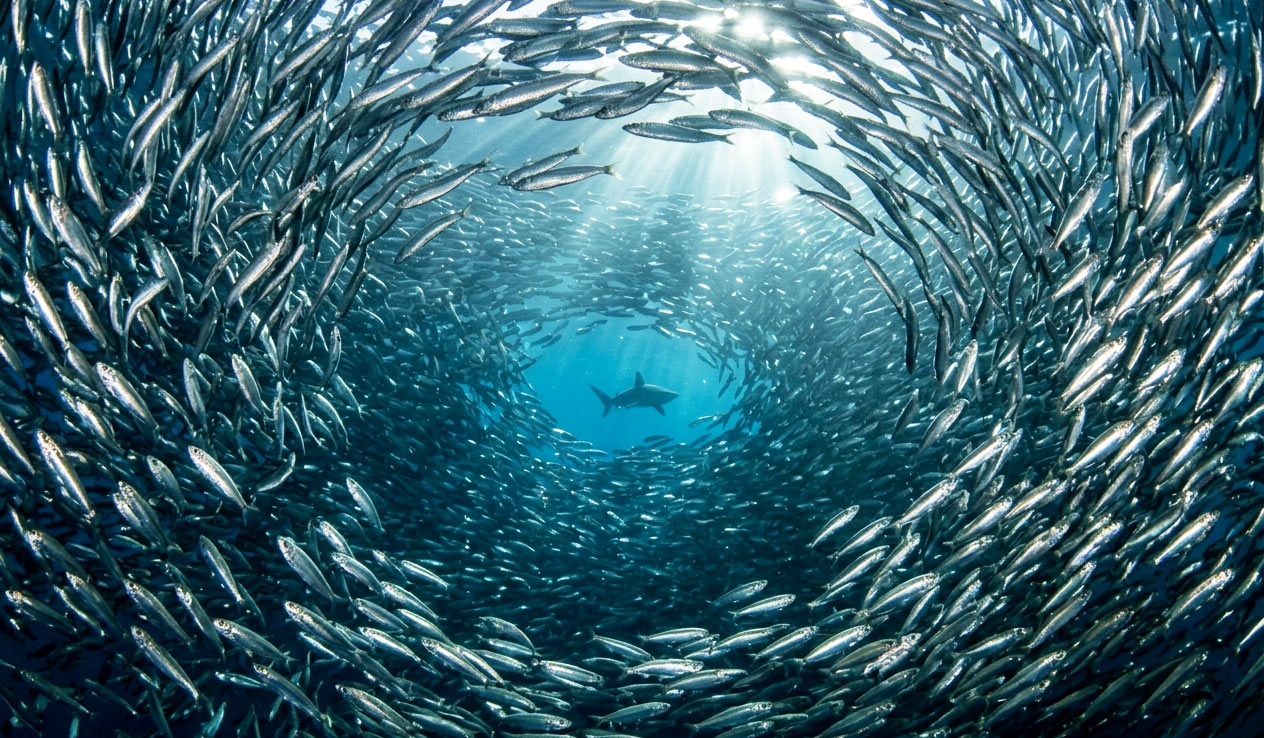
One of the most memorable parts of the Sardine Run is watching predators work together around a bait ball. Dolphins may drive sardines into tighter groups, sharks move through the bait, gannets dive from above, and whales may arrive when the feeding activity intensifies.
These encounters are fast, natural, and unpredictable. They require an experienced crew that understands ocean conditions, animal behaviour, boat positioning, and guest safety.
As a specialist Sardine Run operator, African Watersports focuses on giving guests the best possible chance of experiencing the action while respecting the ocean, the wildlife, and the conditions on the day.
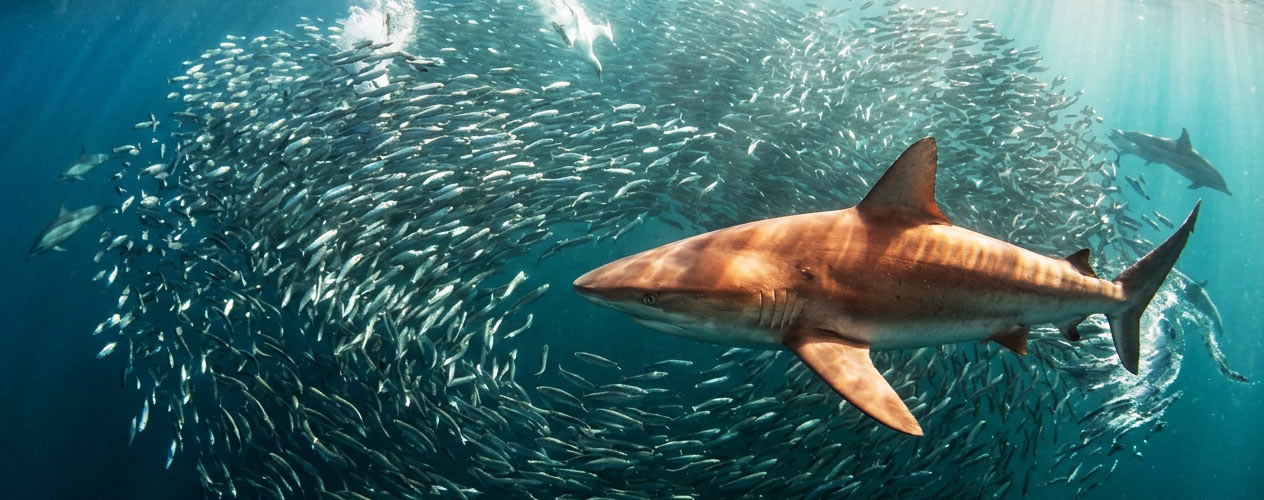
Why the Sardine Run Is a Photographer's Dream
The Sardine Run offers world-class opportunities for photography and videography. For many wildlife photographers, it is one of the most exciting assignments in the world because the story unfolds in real time and no two encounters look the same.
Photographers may have the chance to capture:
- Sardine shoals moving through blue water
- Dolphins charging through bait balls
- Sharks feeding in open water
- Cape gannets diving from above
- Whales moving through concentrated bait
- Surface feeding and dramatic ocean activity
- Wide coastal scenery along the Wild Coast
The combination of marine life, movement, scale, and raw predator behaviour makes the Sardine Run one of the most visually powerful wildlife events on the planet.
Why Choose African Watersports for the Sardine Run?
African Watersports brings practical ocean experience, suitable boats, and the range needed to operate effectively along the Wild Coast during the Sardine Run season.
The Port St Johns launch position gives the team access to a wide section of coastline, while the boat capacity and fuel planning allow the crew to search productive areas when the action is spread out. This is important because successful Sardine Run days often depend on mobility, timing, local knowledge, and the ability to respond when activity develops somewhere along the coast.
African Watersports' fixed wing spotter plane strengthens this advantage by helping the team cover areas quickly, locate where the action is developing, and improve the chances of finding the best Sardine Run activity within a 90 km radius from Port St Johns.
With African Watersports, guests join a team that understands the demands of Sardine Run expeditions, from early launches and long ocean days to reading wildlife behaviour and making safe decisions in changing conditions.
Book Your Sardine Run South Africa Adventure
The Sardine Run South Africa is one of nature's greatest marine spectacles. It draws divers, photographers, wildlife enthusiasts, and ocean adventurers from around the world.
From Port St Johns, African Watersports places guests in one of the most important Sardine Run regions, with access to a large stretch of Wild Coast water where the action can unfold during June and July.
Whether you want to experience Sardine Run diving, witness sharks and dolphins feeding, photograph one of the ocean's most dramatic migrations, or simply be part of an unforgettable marine expedition, this is one of South Africa's greatest ocean adventures.
Join African Watersports this Sardine Run season and experience the Wild Coast from one of the best-positioned launch points in South Africa.
Book Your Adventure2027 Sardine Run Expeditions
Join African Watersports for an unforgettable Sardine Run expedition from Port St Johns along South Africa's Wild Coast. Each package includes 7 days dedicated to searching for bait balls, dolphins, sharks, whales, Cape gannets, and the incredible predator activity that makes the Sardine Run one of the world's greatest marine wildlife experiences.
Expedition 1
Package: 7 Day Package
Arrive: 13 June 2027
Depart: 19 June 2027
8 Seats AvailableExpedition 2
Package: 7 Day Package
Arrive: 19 June 2027
Depart: 25 June 2027
8 Seats AvailableExpedition 3
Package: 7 Day Package
Arrive: 25 June 2027
Depart: 1 July 2027
8 Seats AvailableExpedition 4
Package: 7 Day Package
Arrive: 1 July 2027
Depart: 7 July 2027
8 Seats AvailableExpedition 5
Package: 7 Day Package
Arrive: 7 July 2027
Depart: 13 July 2027
8 Seats AvailableExpedition 6
Package: 7 Day Package
Arrive: 13 July 2027
Depart: 19 July 2027
8 Seats AvailableExpedition 7
Package: 7 Day Package
Arrive: 19 July 2027
Depart: 25 July 2027
8 Seats AvailableSardine Run Common Questions & Answers
When is the best time to join the Sardine Run in Port St Johns in 2027?
From our experience, the best window is generally June into July, with the Wild Coast often producing its strongest action from 13 June through the end of July. That said, this is a wild migration, not a scheduled event, so flexibility always gives you a better chance.
Is Port St Johns a good base for the Sardine Run?
Yes. Port St Johns is one of the key gateways to the Wild Coast Sardine Run. The broader region is well known for offshore action, and nearby areas such as Waterfall Bluff and Mbotyi are regarded as some of the most productive zones when the migration is moving properly.
Can you guarantee we will see sardines or bait balls?
No honest operator should guarantee that. The Sardine Run is one of the greatest marine spectacles on Earth, but it is still nature on nature's terms. What African Watersports can do is put you in the best possible position, read the ocean correctly, and maximise your opportunities.
Why do people miss the action even during Sardine Run season?
Success depends on several factors lining up at once, including sardine movement, cold-water conditions, predator activity, visibility, sea state, and safe launch conditions. You can be in the right month and still have a slow day, which is why we recommend multiple ocean days.
How many days should I book?
If possible, book multiple ocean days rather than a single outing. The Sardine Run is weather and wildlife dependent, and spending more time on the water significantly increases your chances of witnessing the best action.
What marine life can I expect to see besides sardines?
The Sardine Run is about far more than sardines. Common dolphins, sharks, humpback whales, tuna, game fish, Cape gannets, and other seabirds are regularly encountered. Often the real spectacle is the predator behaviour surrounding bait balls.
Will I definitely see sharks, and is that dangerous?
Sharks are a natural part of the Sardine Run ecosystem and one of the reasons the event is so dramatic. However, this is not reckless tourism. Guests are properly briefed, entries are carefully managed, and all interactions are conducted with safety and respect for the wildlife.
Is this trip better for scuba divers or snorkellers?
Both can enjoy the Sardine Run, but much of the action happens quickly and close to the surface. Snorkellers often have exceptional encounters, while scuba divers can benefit from favourable conditions when bait balls develop deeper.
Can beginners join the Sardine Run?
Beginners can sometimes participate, but this is not a typical holiday swim. Guests should be comfortable in the ocean, capable of following instructions quickly, and honest about their confidence levels in open-water conditions.
Do I need to be very fit?
You do not need to be an elite athlete, but you should be reasonably fit, mobile, and confident in open ocean conditions. Water entries can be quick, boats may encounter rough seas, and conditions can change rapidly.
What is the biggest challenge most guests underestimate?
Seasickness and fatigue. Long hours scanning the ocean, changing weather conditions, swell, chop, and repeated water entries can be physically demanding. Arriving rested and well prepared makes a significant difference.
How cold is the water during the Sardine Run?
The water can be surprisingly cold, particularly when productive cold-water conditions are present. A suitable wetsuit and proper thermal protection are strongly recommended.
What should I pack for a Sardine Run trip to Port St Johns?
Bring a wetsuit, mask, snorkel, fins, sun protection, waterproof jacket, dry bag, and any personal medications. Divers should also bring certification cards, logbooks, and any equipment arranged in advance.
Should I bring my own gear or rent?
If you own equipment that you know and trust, bringing it is generally the best option. Familiar gear allows you to move more confidently and comfortably in fast-moving situations.
Is underwater visibility always good during the Sardine Run?
No. Visibility varies significantly depending on swell, currents, plankton levels, weather, and where the activity is occurring. Some days can be crystal clear, while others may be challenging.
How do I get to Port St Johns for the Sardine Run?
Most guests either self-drive or travel via Mthatha, which is the nearest airport. Durban and East London are also common access points. African Watersports assists with transfers for diving guests.
Is the Sardine Run only about being in the water?
Not at all. Many incredible encounters are experienced from the boat. Dolphins, whales, diving birds, bait-ball activity, and spectacular Wild Coast scenery can make for unforgettable days even without entering the water.
Is this a good trip for photographers?
Absolutely. The Sardine Run is one of the world's premier marine wildlife photography opportunities, combining dolphins, sharks, whales, birds, bait balls, and dramatic ocean conditions into one extraordinary experience.
What mindset should I come with if I want the best experience?
Come for the entire marine safari rather than focusing on one specific encounter. The best experiences come from appreciating the search, the wildlife behaviour, the scenery, and the unpredictability of the ocean.
Why book the Sardine Run with African Watersports?
African Watersports combines extensive ocean experience, specialised Sardine Run operations, powerful Super Duck boats, and fixed-wing aerial support to maximise opportunities while maintaining a strong focus on guest safety.
What happens if the sea is too rough to launch?
If conditions are unsafe, we do not launch. Safety always comes first. The Wild Coast can change quickly, and no wildlife encounter is worth compromising guest safety.
Do you go out every day during the Sardine Run?
We aim to launch whenever conditions allow, but we never force a trip in unsuitable weather. Flexibility is an important part of any successful Sardine Run expedition.
How early do the trips start each day?
Most days begin early in the morning. Early launches often provide calmer conditions and increase the chances of locating predator activity before it develops further.
How long are we out at sea each day?
Expect several hours on the water. Some days may be shorter, while others can become full-day sessions when the action remains active and productive.
Will we travel far from Port St Johns to find the action?
Sometimes. The Sardine Run moves continuously, and African Watersports follows the activity wherever practical. Some days the action is close, while other days require covering larger sections of coastline.
Is the boat ride rough?
It can be. The Sardine Run takes place in open ocean conditions along the Wild Coast. Some days are calm, while others can be challenging. Guests prone to seasickness should prepare accordingly.
What's the biggest mistake first-time Sardine Run guests make?
Expecting every day to resemble a wildlife documentary. The ocean is unpredictable. Guests who embrace the entire experience generally have the most rewarding trips.
Do I need travel insurance for this trip?
Yes. Travel insurance is strongly recommended because Sardine Run expeditions involve weather-dependent activities, travel logistics, and adventure-based experiences.
Is accommodation included with African Watersports?
We typically assist guests with accommodation recommendations rather than including accommodation in the package. Port St Johns offers a variety of suitable options.
Can non-divers or partners join on the boat?
In many cases, yes. As long as guests are comfortable offshore, non-divers can still enjoy incredible sightings of dolphins, whales, sharks, and seabird activity from the vessel.
What kind of boats do you operate?
African Watersports operates Super Duck vessels that are purpose-built for local ocean conditions. They provide stability, speed, range, and the flexibility required for Sardine Run operations.
How do you actually find the sardines each day?
We combine local knowledge, ocean experience, bird activity, predator behaviour, and reports from the coastline. We also utilise a fixed-wing spotter plane, allowing us to locate activity quickly and direct vessels efficiently.
What makes a perfect Sardine Run day?
The best days occur when cold water, active sardine shoals, feeding dolphins, diving birds, sharks, whales, and good visibility all align. When that happens, the entire marine food chain comes alive.
What should I do to prepare before arriving in Port St Johns?
Arrive rested, hydrated, and prepared for early starts. Organise your equipment beforehand, manage seasickness proactively, and come with a flexible mindset that embraces real ocean conditions.
History of the Sardine Run
The Sardine Run is one of the world's most remarkable marine migrations, attracting sharks, dolphins, whales, game fish, and seabirds to South Africa's Wild Coast each winter. Over the years, this natural phenomenon has become famous among divers, photographers, marine scientists, and wildlife enthusiasts for its spectacular bait-ball encounters and intense predator activity. Understanding the history of the Sardine Run provides valuable insight into how this extraordinary event became one of the planet's most sought-after ocean adventures.